





Museums and memorial houses of Sighetu Marmaţiei
The Ethongraphic Museum of Maramures
Opened to public since 1926, the museum presents at the ground floor a collection of wood and glass icons, statues and seal engravers. At the first floor visitors can admire tools and utensils used for traditional crafts, furniture, costumes, textils, ceramics, ornaments ans masks specific for historycal Maramures.
The Maramures Village Museum
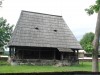
Founded in 1981, Sighet Village Museum is the largest and most complex display of the traditional Maramures village and the rural artisanal techniques from this region. The basic concept of the museum is the arrangement of the homesteads around the church, as in Maramures villages, all the streets and paths leading towards it. The church (errected in 1621 in Oncesti) is situated on a hill thus overviewing the entire community and showing once more the importance of religion in Maramures.
The museum holds over 30 homesteads (the oldest ones dating since 16th century) together with their appurtenances and traditional equipments: stable, barn, well, oil press or carriage. Some of the houses have the original furniture and accesories: the stove, the pottery, kitchen tools, weaving loom or toddler swing.
Visitors can admire and understand different building techniques depending on the Maramures region where the houses were errected and also based on the century they were built in. Houses from Borsa, Ruscova, Mara-Cosau, Campulung la Tisa, Sapanta or Iza Valley areas are displayed, among them tourists being able to withness hungarian, jewish and ukrainian households.
The Archaeology and History Exhibition
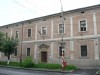
Set at the ground floor of the former Piarist Monastery, the exhibition contains artefacts found in historical Maramures. They are grouped chronologically, starting with Stone and Bronze Age up to modern time.
The Natural Sciences Exhibition
Hosted at the first floor of the former Piarist Monastery, the exhibition presents a collection of stuffed mammals and birds and a herbarium with 16.000 pages.
The Memorial of the Victims of Communism
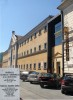
The Memorial is more than a museum, it is an accurate reminder, a gruesome and painful one, of the horrors commited by the communists not only in this prison but all over Romania.
The Memorial holds an impressive collection of testimonials, documents, pictures, personal belongings, various assets that belonged to the prison, etc. displayed in the former cells and other rooms of the prison. The exhibition halls are arranged on three levels and each one of them evokes a different episode in the history of the prison and in the metamorphosis of Romania into a communist state.
The building was errected in 1897 by the architect Wagner Gyula and has been awarded the title of 'Architectural Monument'. Together with the Justice Palace, they were forming a complex built to celebrate the shift into the 20th century. Starting in 1948, the prison became a political one, communists incarcerating here peasants that resisted collectivisation, students, priests, officials or academicians. The prison was ment to exterminate all those fighting agains communists also intellectuals or politicians discredited by the regime.
The prison functioned as a political one until 1955, the year Romania joined UN, when it became a regular prison. By then, the harsh detentions conditions, tortures, cruel interrogations, starvation and the lack of health services had made their mark. More than 50 inmates have died (no one knows the exact number), some have been transfered to other prisons were the nightmare continued and some were set free, although never recovering or forgetting the detention. In 1977 the prison was closed down and became a warehouse.
Several art pieces symbolizing the horrors and the sufferance endured by the emprisoned but also their hope for freedom are displayed in the Memorial. The most well-known and representative is "The Procession of the Sacrificed", a group of 18 bronze statues located in the backyard showing 18 human bodies walking towards a wall, a dead end, just like communism.
In the inner court of the Memorial we can also find "The Space for Prayer and Recollection", an architectural masterpiece reflecting the faith in God of the former inmates and proving the importance of religion in their daily life, as the last stand agains their persecutors.
Elie Wiesel Memorial House
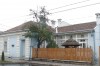
The museum is set in the house where Elie Wiesel, 1986 Nobel Peace Prize winner, has lived until the age of fifteen (1928-1944) when he and his family were deported to Auschwitz and Buchenwald. The memorial house holds an important collection of photographs, furniture and various other objects that used to belong to the jewish community in Sighetu Marmatiei.
Ioan Mihalyi de Apşa Memorial House
The museum displays the library, original documents and the study room of Ioan Mihaly de Apsa (1844-1914), well-known historian with important archaeological findings in Maramures villages and author of "Diplome maramureșene din secolul al XIV-lea și al XV-lea". At the ground floor of the memorial house there is an exhibition of contemporary art.